
Few things generate public debate faster than politics.
Few things generate public debate faster than celebrities speaking about politics.
When those two worlds collide, reactions are almost guaranteed to follow.
That is exactly what happened after comments attributed to rock legend Sammy Hagar began circulating online, sparking intense discussion among fans, political observers, and entertainment commentators alike.
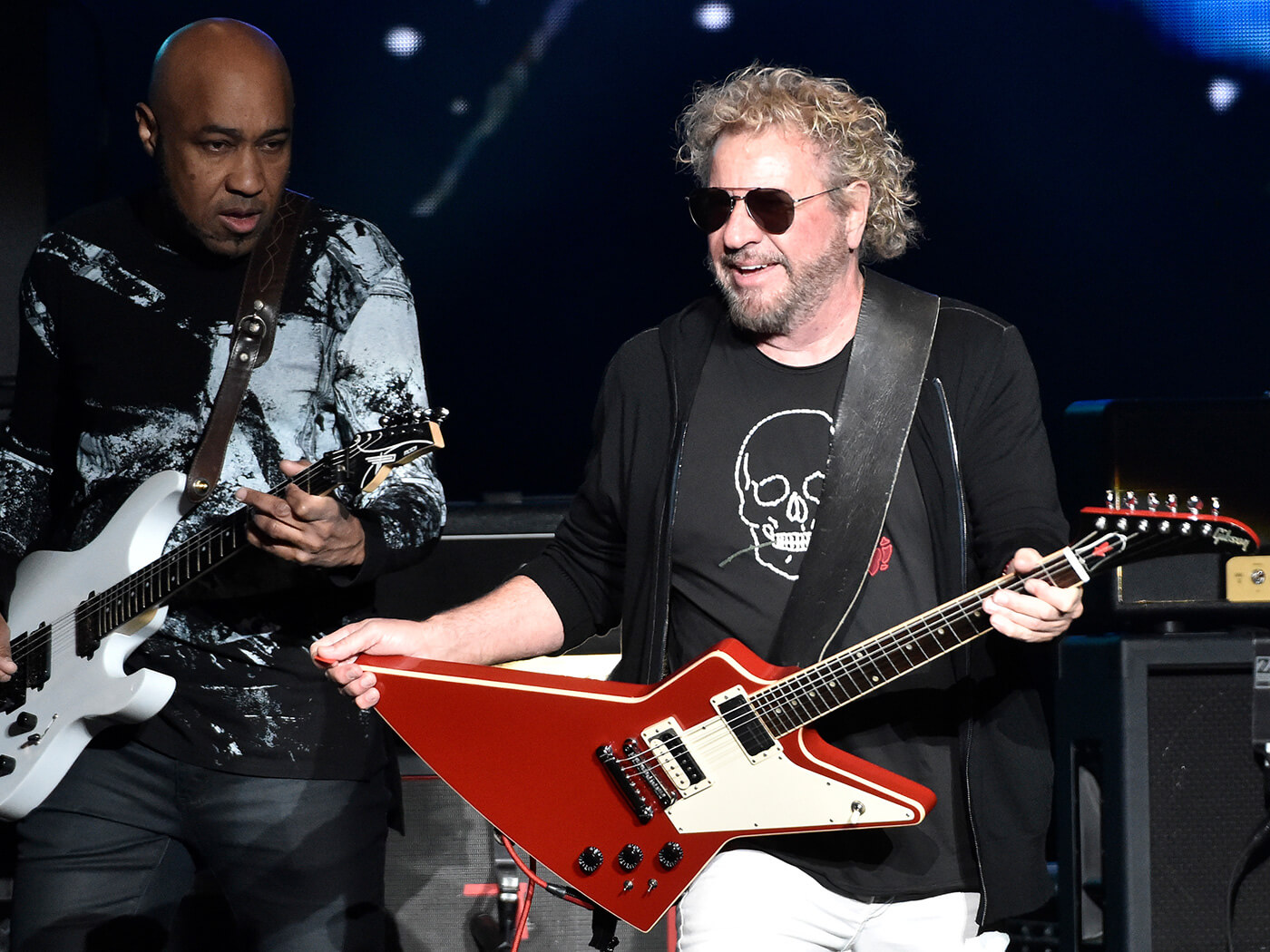
Within hours, social media platforms were flooded with responses.
Some people applauded the remarks.
Others strongly disagreed.
Many questioned whether entertainers should involve themselves in political discussions at all.
Regardless of individual viewpoints, one thing quickly became clear:
The conversation had grown far beyond a single statement.
For decades, Sammy Hagar has built a reputation as a musician, performer, entrepreneur, and cultural figure whose influence extends far beyond the stage.
Known for his energetic performances and outspoken personality, he has never been viewed as someone afraid to share his opinions.
That willingness to speak openly is one reason supporters admire him.
It is also one reason critics occasionally challenge him.
As discussions intensified, supporters argued that public figures have the same right to express political opinions as any other citizen.
They emphasized that freedom of expression applies regardless of whether opinions are popular or controversial.
Many noted that artists, actors, musicians, and athletes have historically participated in public debates about issues they consider important.
From their perspective, Sammy was simply exercising that right.
Others disagreed.
Some critics argued that audiences follow musicians for entertainment rather than political commentary.

They suggested that celebrity political statements can sometimes create division among fan communities.
Several commentators noted that fans often come from diverse political backgrounds, making political discussions particularly sensitive.
This disagreement helped fuel even more conversation online.
The debate soon expanded beyond Sammy Hagar himself.
People began discussing larger questions.
Should celebrities use their platforms to discuss politics?
Do famous individuals have greater responsibility when sharing opinions?
Can artists separate their creative work from their political beliefs?
There were no easy answers.
Different people arrived at different conclusions.
Some insisted that artists should speak freely about issues that matter to them.
Others preferred that entertainers focus exclusively on music, film, or sports.
Neither side appeared willing to change its position.
What made the discussion particularly notable was the passion displayed by both supporters and critics.
Fans who agreed with Sammy praised his willingness to remain outspoken despite potential backlash.
They described his comments as an example of standing by personal convictions.
Meanwhile, opponents argued that such rhetoric contributes to an already polarized political environment.
The result was a conversation that reflected broader divisions throughout American public life.
Politics increasingly influences discussions far beyond government and elections.
It appears in sports.
Entertainment.
Business.
Social media.
Popular culture.
As a result, statements from well-known public figures often become part of larger national conversations.
Sammy Hagar’s situation illustrates that reality.
Whether people agreed or disagreed with the reported comments, many viewed them as part of an ongoing debate about leadership, accountability, and public discourse.
Another factor driving attention was Sammy’s long-standing public profile.
After decades in the spotlight, virtually anything he says attracts interest.
His supporters feel connected to him through years of music and performances.
His critics are equally aware of his influence.
That visibility means even brief comments can generate significant attention.
Social media further amplified the discussion.
Platforms quickly filled with reactions, memes, opinion pieces, and video clips.
Some users celebrated the remarks.
Others condemned them.
:max_bytes(150000):strip_icc():focal(999x0:1001x2)/sammy-hagar-4-112524-c4f57d659c67499b84833e4eb309a826.jpg)
Many simply used the opportunity to debate broader political issues.
The original comments became only one part of a much larger conversation.
Perhaps the most revealing aspect of the reaction was how differently people interpreted the situation.
Supporters viewed the comments as an act of honesty.
Critics viewed them as unnecessarily divisive.
Neutral observers often focused less on the content itself and more on the broader question of celebrity influence.
Those competing interpretations demonstrate how public figures frequently become symbols within larger cultural debates.
In today’s media environment, opinions spread instantly.
A single statement can generate millions of reactions within hours.
Supporters and critics alike mobilize quickly.
News organizations cover the controversy.
Social media amplifies every response.
What begins as a comment can rapidly evolve into a national conversation.
That appears to be exactly what happened here.
As debate continues, one reality remains unchanged.
Public figures will continue expressing opinions.
Audiences will continue evaluating those opinions.
And people will continue disagreeing about where entertainment, politics, and public influence should intersect.
For Sammy Hagar, the controversy serves as another reminder of how powerful celebrity voices can be in shaping public discussion.
Whether viewed as courageous, controversial, or somewhere in between, the reaction demonstrates that political conversations involving well-known figures remain among the most closely watched topics in modern culture.
And judging by the intensity of the responses, that conversation is unlikely to end anytime soon.